


2025 Year in Review
The contours of the next Industrial Revolution came into sharper focus this year. Analysts often describe this period as the Sixth Wave of Innovation, driven by breakthroughs in energy, automation, edge computing, advanced manufacturing, and space-based systems. Across the Industrious Ventures portfolio, these forces moved from theory to execution, evidenced by deployed hardware, operational systems, and scaled capital formation. They materialized through commercial milestones, successful on-orbit operations, expanded domestic production capacity, and capital formation at a meaningful scale.
Our portfolio companies closed significant funding rounds, delivered hardware to the lunar surface, validated on-orbit L-band PNT for resilient navigation, advanced propulsion and reactor programs toward demonstration, acquired critical suppliers, and entered the public markets. Milestones like these signals more than technical maturity. They reflect the early formation of durable industrial capability: systems that can be produced at scale, sustained through supply-chain disruption, integrated into national infrastructure, and relied upon in contested environments.
Our role at Industrious remains to support the builders driving this shift. They are creating the architectures, supply chains, and industrial infrastructure that will shape global competitiveness for decades.
The highlights below capture the progress of 2025 and point to the momentum carrying into 2026 and beyond.
WELCOMING NEW BUILDERS TO THE PORTFOLIO:
This year brought new partnerships with founders advancing the architectures and supply chains shaping this next era.
Aerospacelab ($110MM Series B)
• Aerospacelab rapidly scaled their vertically integrated satellite production in the United States and Europe as well as expanded their manufacturing capacity to meet commercial and government demand.
Amca ($76.5MM Seed)
• The Advanced Manufacturing Company of America (Amca), a next-generation aerospace and defense company bringing a renewed sense of urgency to mission-critical hardware innovation, made strong progress this year by acquiring multiple legacy suppliers and reducing supply chain risk across the industry.
Antares Nuclear ($96MM Series B)
• Antares advanced its sodium heat-pipe microreactor toward demonstration, secured critical HALEU pathways and continued progress with DoD, DoE, and NASA partners.
Astro Mechanica ($27.1MM Seed and Series A)
• Astro Mechanica is building next-generation supersonic flight capabilities, starting with their turboelectric adaptive engine. Throughout the year, the company received additional investment from United Airlines Ventures and remains positioned for significant technical demonstrations in 2026.
Chiplytics (Seed)
• Chiplytics is commercializing technology developed by Sandia National Labs to deliver AI-driven authentication hardware and software tools that improve the integrity of global electronics supply chains.
Space Kinetic ($12MM Seed)
• Space Kinetic is building a high-throughput orbital logistics architecture based on stored mechanical energy. In 2025, the company secured several DARPA awards and progressed toward demonstrations that enable scalable mass transport in space.
Plus, one additional soon-to-be-announced investment!
CONTINUING TO STAND BEHIND OUR FOUNDERS:
Alongside new investments, we continued to stand behind and back our existing portfolio companies who are scaling core industrial and space infrastructure.
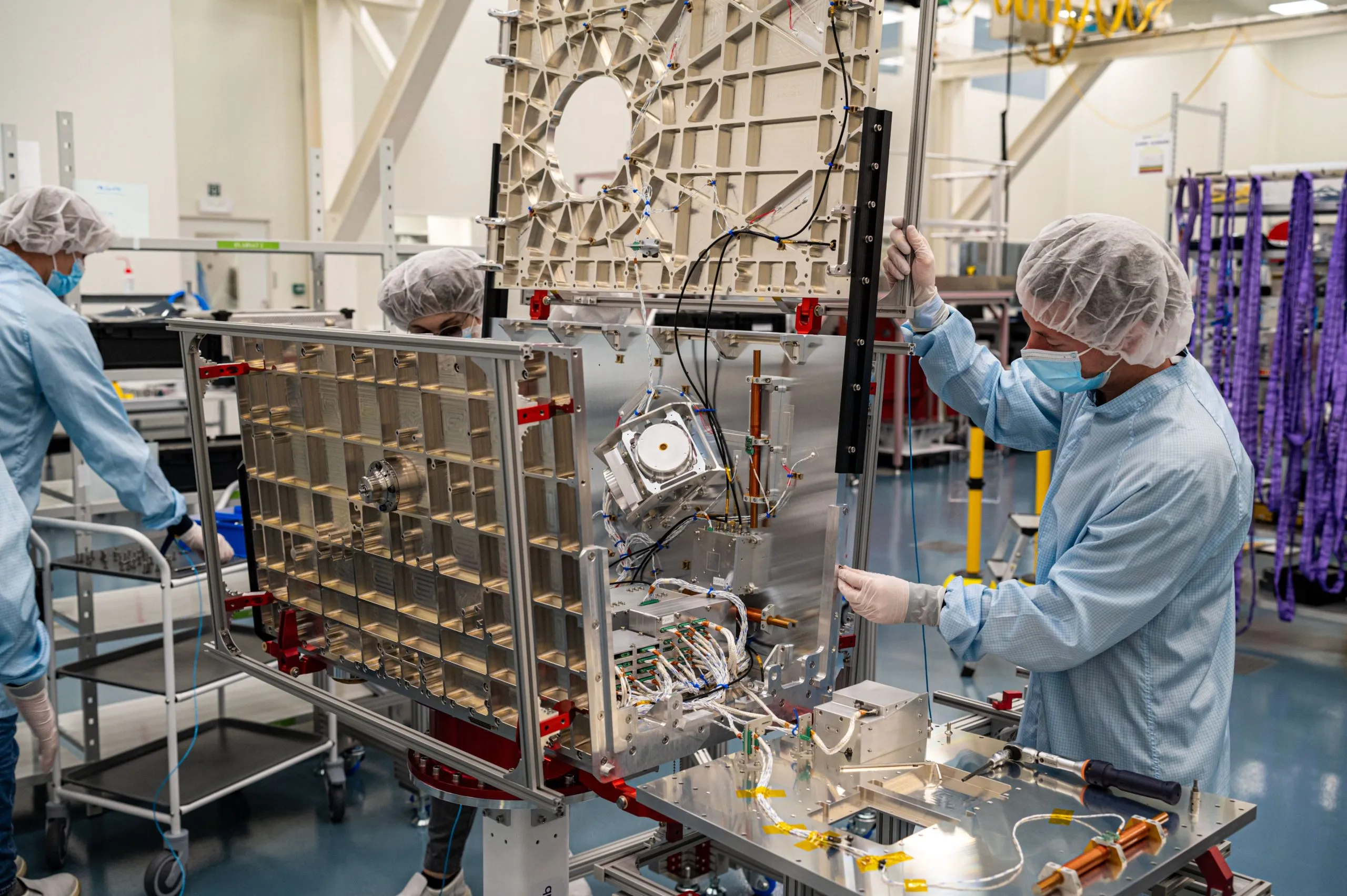
Stoke Space ($260MM Series C and $510MM Series D)
• We deepened our commitment to Stoke’s fully reusable launch architecture. In 2025, Stoke was selected for the National Security Space Launch program, continued the build out their launchpad at the historic Space Launch Complex-14, and advanced major propulsion, vehicle systems, and software.
Xona Space Systems ($92MM Series B)
• Xona company completed critical technology demonstrations and flight heritage with their Pulsar-0 mission. Pulsar-0 was the first production-class satellite in its LEO constellation, validating commercial, space-based PNT performance and strengthened engagement with government and commercial users.
Solestial, Inc. ($17MM Series A)
• Solestial recently signed a Space Act Agreement with NASA’s Glenn Research Center to advance the performance and resilience of ultra-thin silicon solar arrays in space environments. They were also awarded a $1.2MM Direct-to-Phase II SBIR contract from SpaceWERX to develop a fast-manufacturing solar array wing for small satellites using its radiation-hardened silicon solar technology.
BUILDING MOMENTUM ACROSS THE PORTFOLIO:
Across the portfolio, teams continued converting technical progress into operational capability.
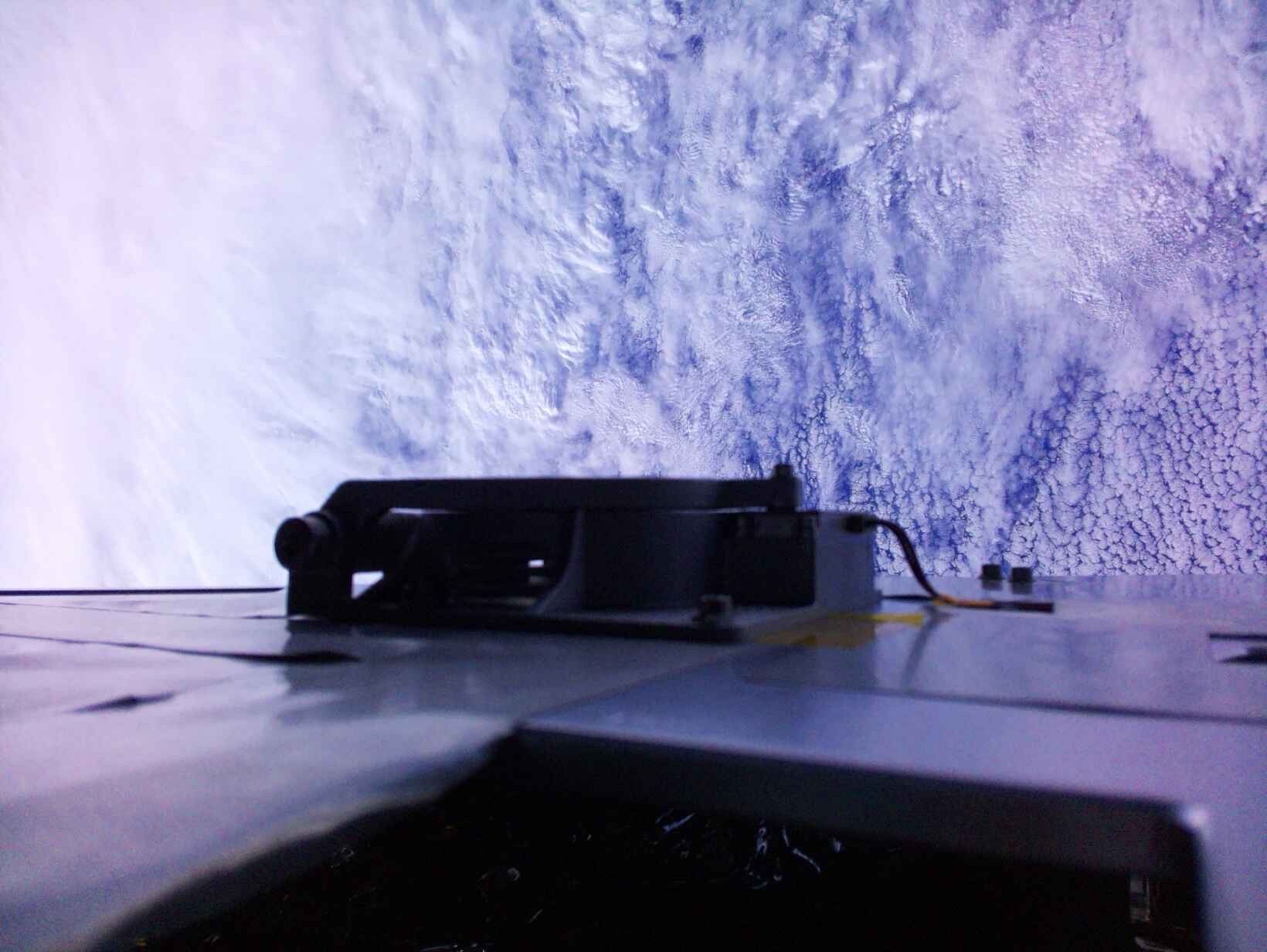
Lunar Outpost secured its fifth NASA mobility award for Artemis operations and continued advancing its Lunar Terrain Vehicle rover and payload programs for sustained lunar activity.
Proteus Space successfully deployed MERCURY ONE, its inaugural four-payload ESPA class spacecraft. MERCURY ONE marks the fastest timeline from a blank sheet design to a launch-qualified ESPA satellite, completed in only 9 months, validating the company’s cutting-edge MERCURY platform with TRL9 flight heritage.
Starfish Space, in conjunction with Impulse Space, successfully completed the Remora mission – a mission to demonstrate automated rendezvous and proximity operations between spacecraft using a single camera as the primary sensor. The company also launched its second Otter Pup spacecraft. Otter Pup 2’s mission will demonstrate its ability to dock with other satellites, validating core Starfish technologies along the way.
Ursa Major expanded production and delivery of its Hadley and Ripley engines to commercial, defense, and international customers, raised a $100MM Series E, and completed a full-Duration static fire of AFRL’s ARMD hypersonic demonstrator.
Xona Space Systems achieved on-orbit validation of its L-band PNT system, de-risking a next-generation navigation architecture designed to deliver precision timing and positioning independent of legacy GPS. The milestone underscores Xona’s role in building foundational infrastructure for modern defense, aviation, and autonomous operations.
MARKET-DEFINING TRANSACTIONS:
Finally, 2025 delivered several transactions that highlight rising market depth and the expanding strategic relevance of these technologies.

Canopy Aerospace was acquired by Trive Capital, forming Canopy Aerospace and Defense – a company designed to solve the most complex technical challenges on preeminent defense and commercial platforms. The company delivers highly specialized materials with exceptional insulative, absorptive, and signal-reducing characteristics.
Truework was acquired by Checkr, a leading background check provider. The acquisition of Truework allows Checkr to expand into employment verification across broader customer segments and verticals.
Voyager Technologies completed their IPO over the summer of 2025, raising $402MM in net proceeds to expand their national security portfolio and finance the first international commercial space station, Starlab set to launch in 2029. Marking one of the year’s most notable commercial-space transactions and reinforcing the growing maturity of space infrastructure markets.
LOOKING AHEAD TO 2026:
The next industrial era is taking shape through what is being built now: new manufacturing capacity and processes, new energy architectures, resilient space infrastructure, and supply chains designed for real-world operating conditions rather than idealized assumptions.
Over the past year, our portfolio companies advanced these systems from concept to application. They demonstrated performance in operationally relevant conditions, moved programs toward deployment, and established the foundations of durable industrial capability. This progress reflects the level of discipline needed to reshape entire sectors, not incrementally, but structurally.
As we enter 2026, the policy environment is increasingly aligned with this reality. Recent executive orders have clarified federal priorities around domestic production, energy resilience, and space-based infrastructure. Last month, we outlined how companies across the Industrious portfolio are positioned to support these priorities in practice. That work is now moving from framework to implementation.
The transition in leadership at NASA further reinforces this shift. The next phase of civil and national space programs will emphasize operational depth, agility, cost discipline, and sustained capability. This environment favors teams that can integrate across programs, manufacture at scale, and deliver systems that perform reliably over time.
The momentum across our portfolio reflects the ambition and rigor required for this phase. We’re proud to support these teams and grateful to the partners who share a long-term view of what industrial strength requires.
Across the Industrious network, over 600 roles opened in 2025, and our portfolio companies are continuing to scale teams to meet the realities of re-industrialization. If you want to be part of the teams building this next era, you can explore open roles across our portfolio here.
Onwards to 2026.
